Essay
Is the agent runtime harness a key enterprise platform capability?
I spent some time with dsh, the agent harness DeepSeek open-sourced last week. Two design choices convinced me the harness layer is becoming a platform capability enterprises should own: an owned harness, a swappable model layer, and committed infrastructure underneath.
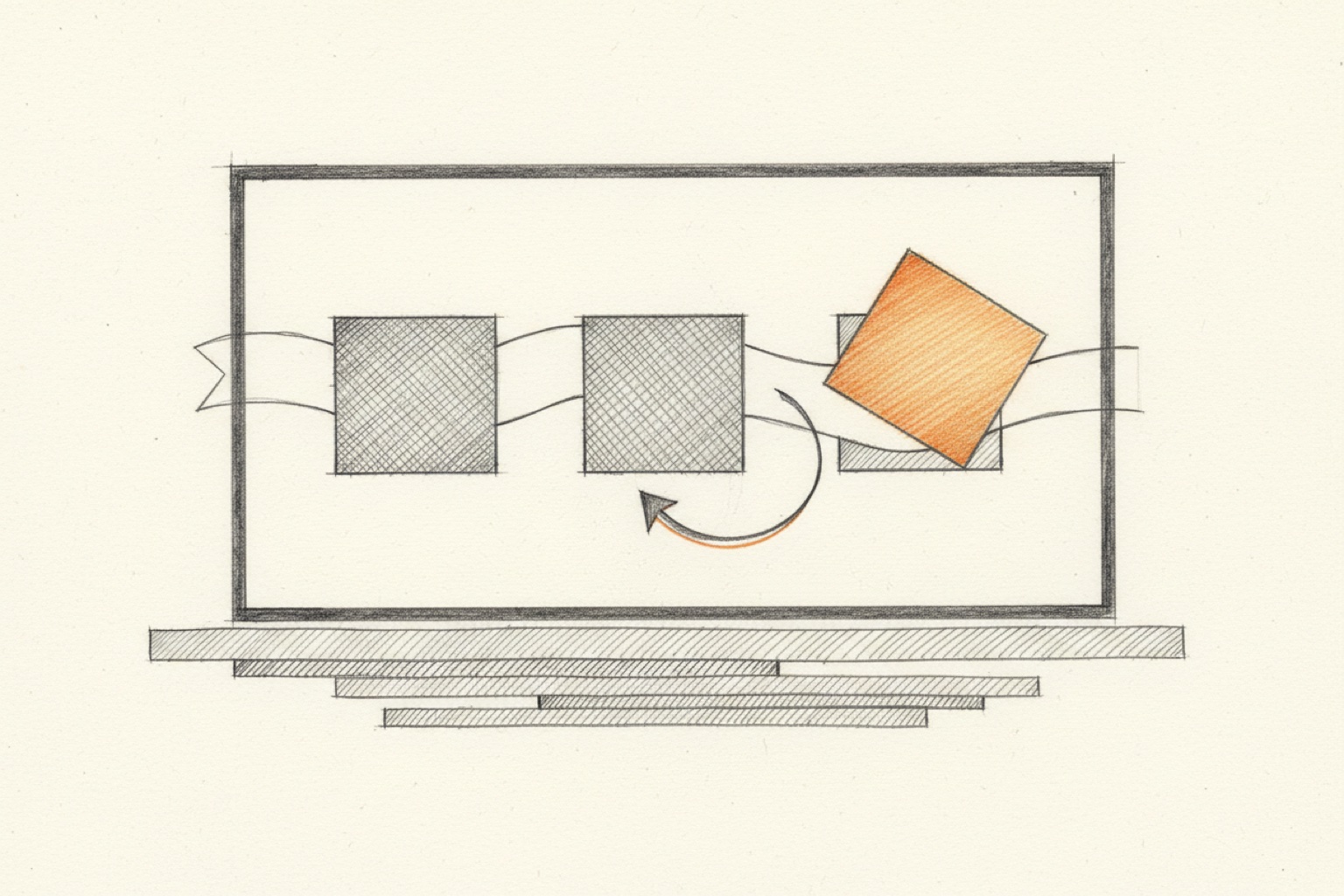
I spent some time playing with the agent harness DeepSeek open-sourced last week. It runs well on my local qwen 3.6 35b model. At first I thought it was another Codex or OpenCode. I came out thinking about a new enterprise platform capability.
Two things about DeepSeek Harness stuck with me.
Everything is a plugin
First, everything in it is a plugin, a true composable architecture. The model, the agent loop, the tools, the sandbox, session state, all of it sits behind interfaces you can swap via a config file.
The context engine
Second, the context engine. It sits on an append-only session log. Every action gets logged, and when the context window fills up and gets compressed, nothing is deleted. The model’s context is just a projection of that log, and you decide what gets projected and how compression works. I am convinced this is where a lot of agent efficiency will come from: the context stays relevant, and nothing is lost when you compress it.
The question
So here is the question I keep turning over: is the agent runtime harness becoming a platform capability we need to call out, like Kubernetes or the API gateway before it?
My current thinking points to yes. The ultimate goal for an enterprise is to obtain and apply intelligence efficiently, on both the performance and the cost side. A stack that can ensure this looks like: an owned harness layer, a swappable model layer, and committed infrastructure investment underneath.
Why own the harness
The obvious pushback: why own it when off-the-shelf agents exist? For me it comes down to visibility. In dsh, every step of the agent is traceable. Model response, tool call, arguments, context assembly, delegation. When an agent underperforms, and sometimes they underperform a lot, you can see exactly where the trajectory broke. With a vendor’s black box you are left guessing. You cannot tune what you cannot see. And owning the harness means the customization is yours too: your tools, your data boundaries, your approval flows and policy enforcement.
The swappable model layer
The swappable model part is about not getting cornered. Model prices move every quarter. Open-weight models keep closing the gap. If the model is just a plugin, hard reasoning goes to a frontier model, routine work goes to a cheap one, sensitive data stays local. A swappable model layer gives us flexibility and resilience.
Which layer becomes the platform
One pattern is interesting to notice: the frontier labs keep open-sourcing their harnesses while keeping the models. They seem to know which layer turns into the platform.
I don’t know yet if dsh itself is the answer. It is nine days old and rough. But the shape of it feels right.